Context: social_Sera comes as a response to the needs of the community of Dumbrava Vlasiei, a vision of an urban village of the future in the present, in the middle of nature, near Bucharest, Romania.
ARGUMENT
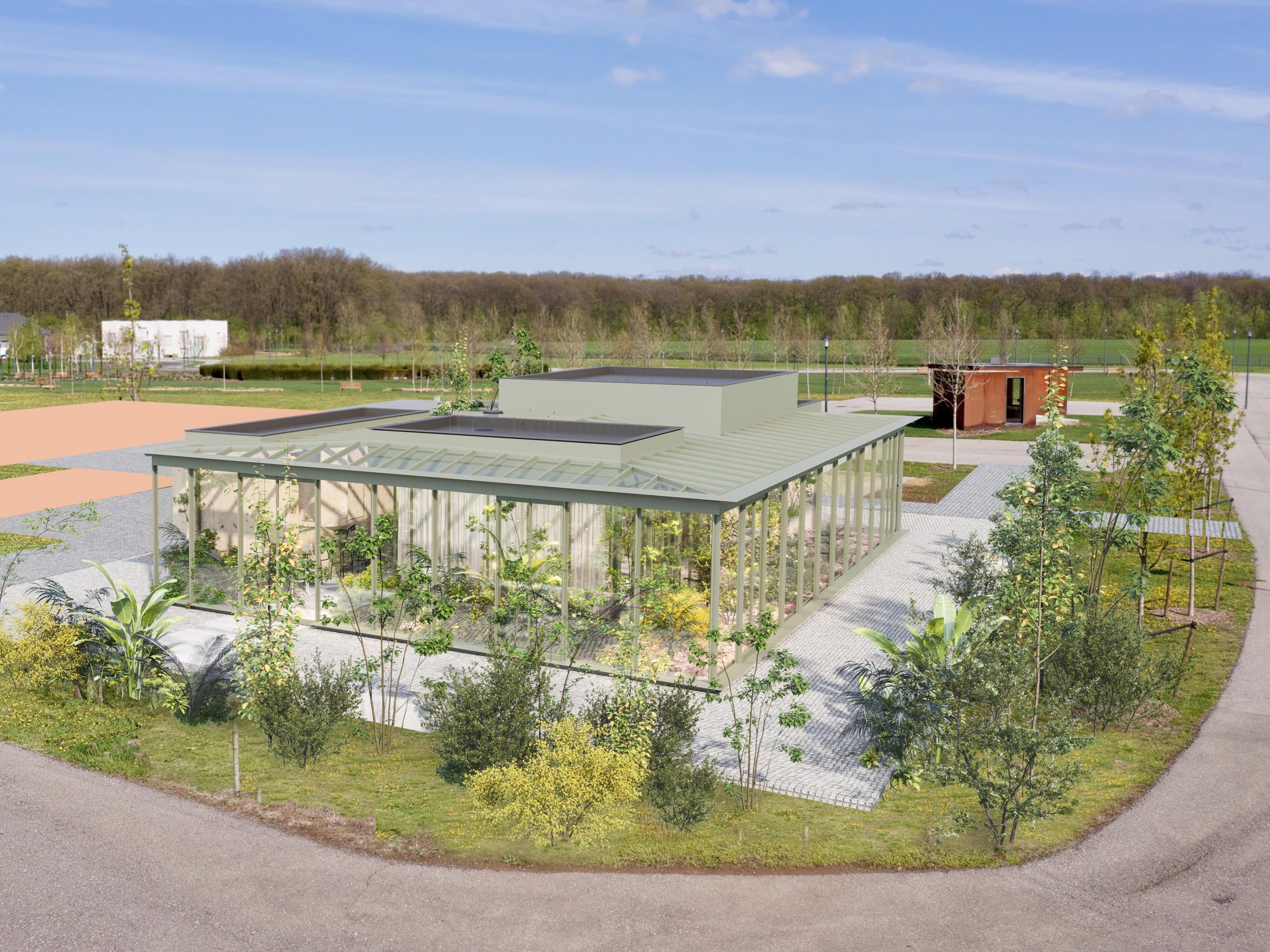
In search of a common denominator of the different forms of freedom of people and nature, we found the need for a spatial intervention that would invite the creation of a collective freedom, without excluding the separation of individual freedoms. A simple architectural gesture, in which the walls lose their presence, in order to enhance the relationship with the environment.
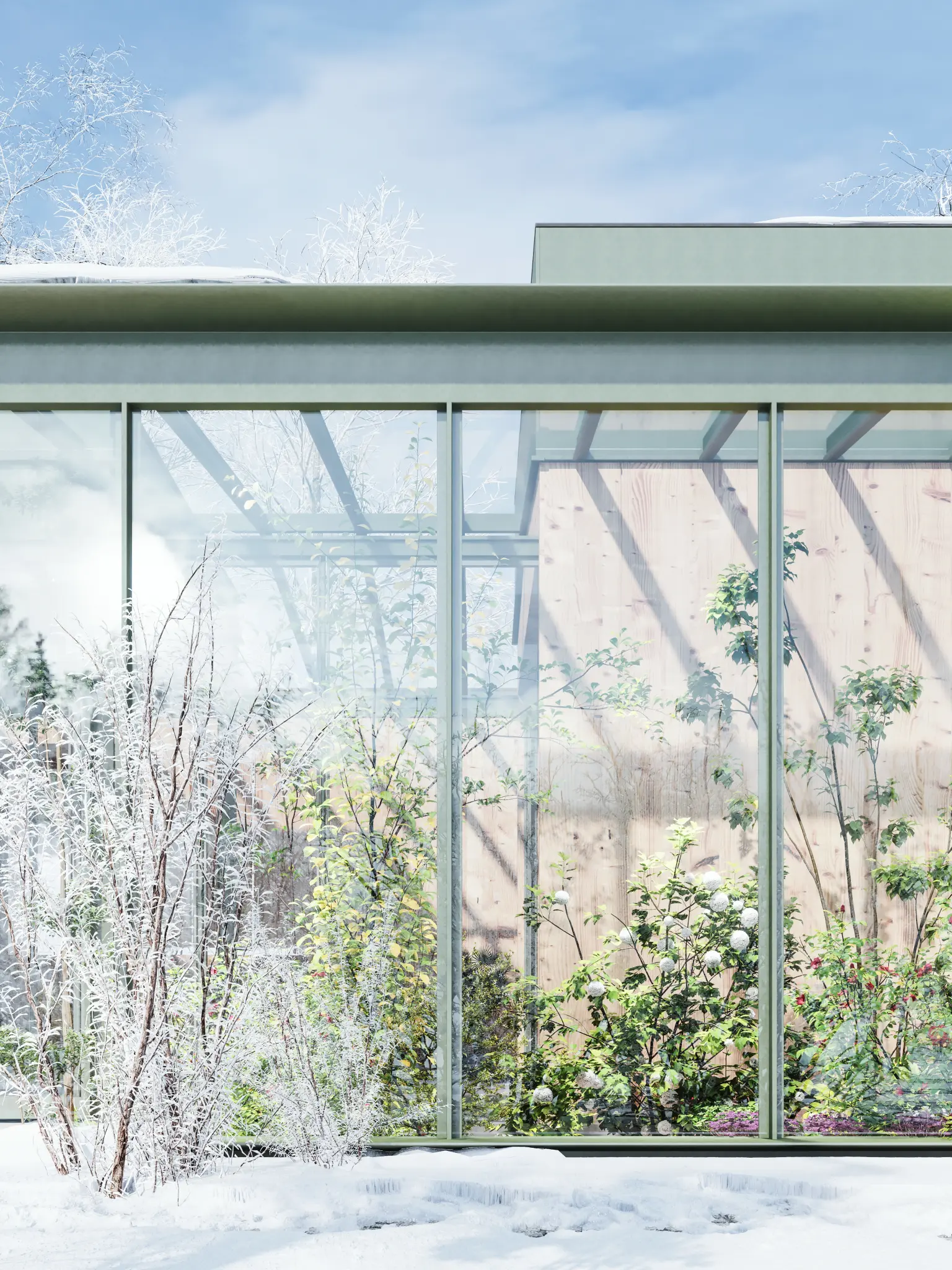
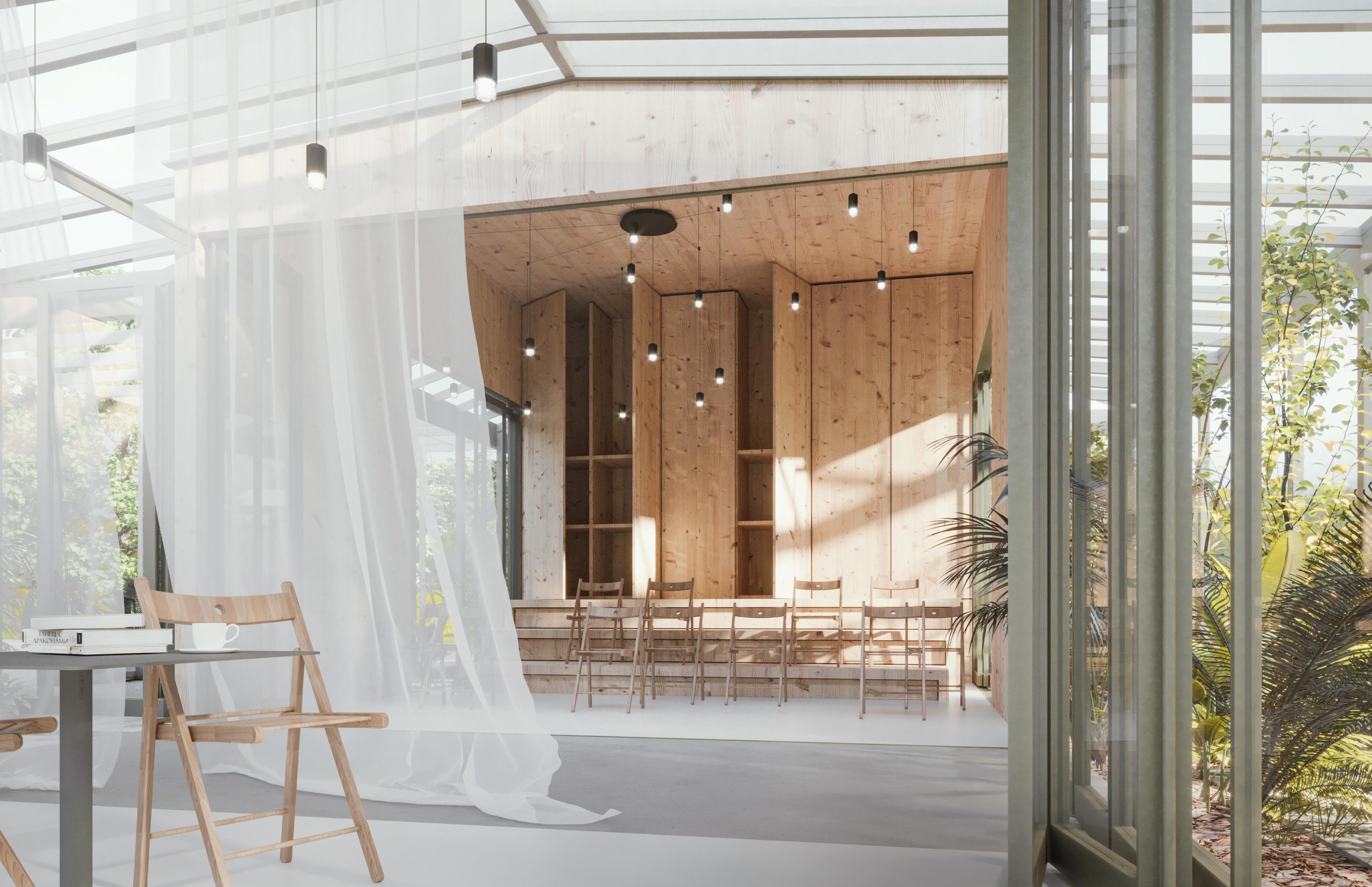
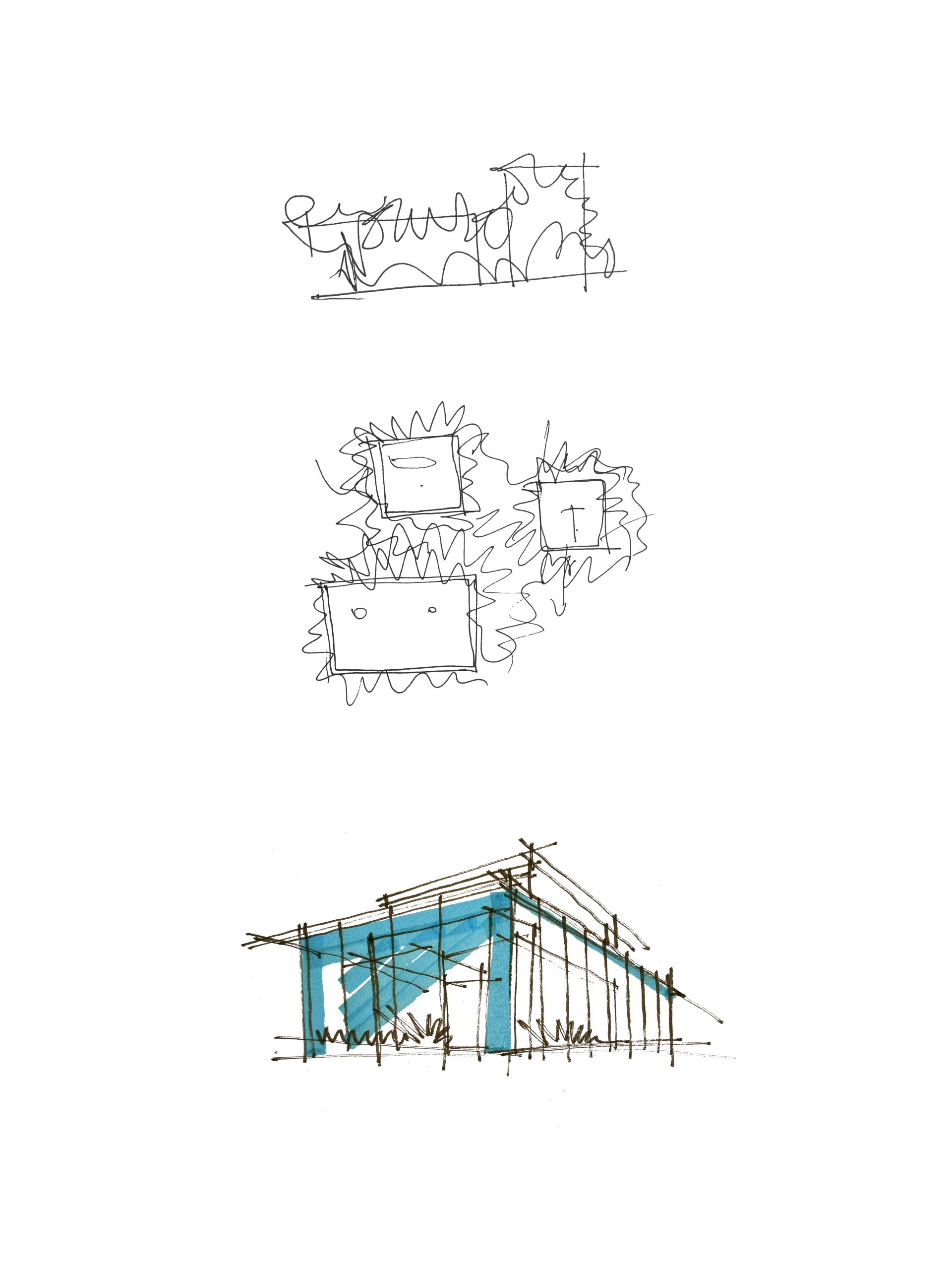
The creation of a greenhouse appeared as a common response to the need for discreet integration in the natural context of the site, to consolidate a community in formation, to raise awareness of the human-nature connection and, of course, to establish new, dynamic perspectives on ways of living. In this manner, an additional filter is formed between man and the outside environment, that of a controlled microclimate, which can grow in parallel with the development of the community, creating a form of interdependence between humans and nature. The project takes on an experimental character through the permanent relationship of the spaces of relaxation, socialization and exposure with the greenhouse.
If in relation to the forest, the meadows and the parks of Dumbrava (The Grove), man perceives the biodiversity of the place in a dynamic dictated by the seasons, in the greenhouse he can experience a controlled environment, to the growth of which he can contribute.
APPEARANCE
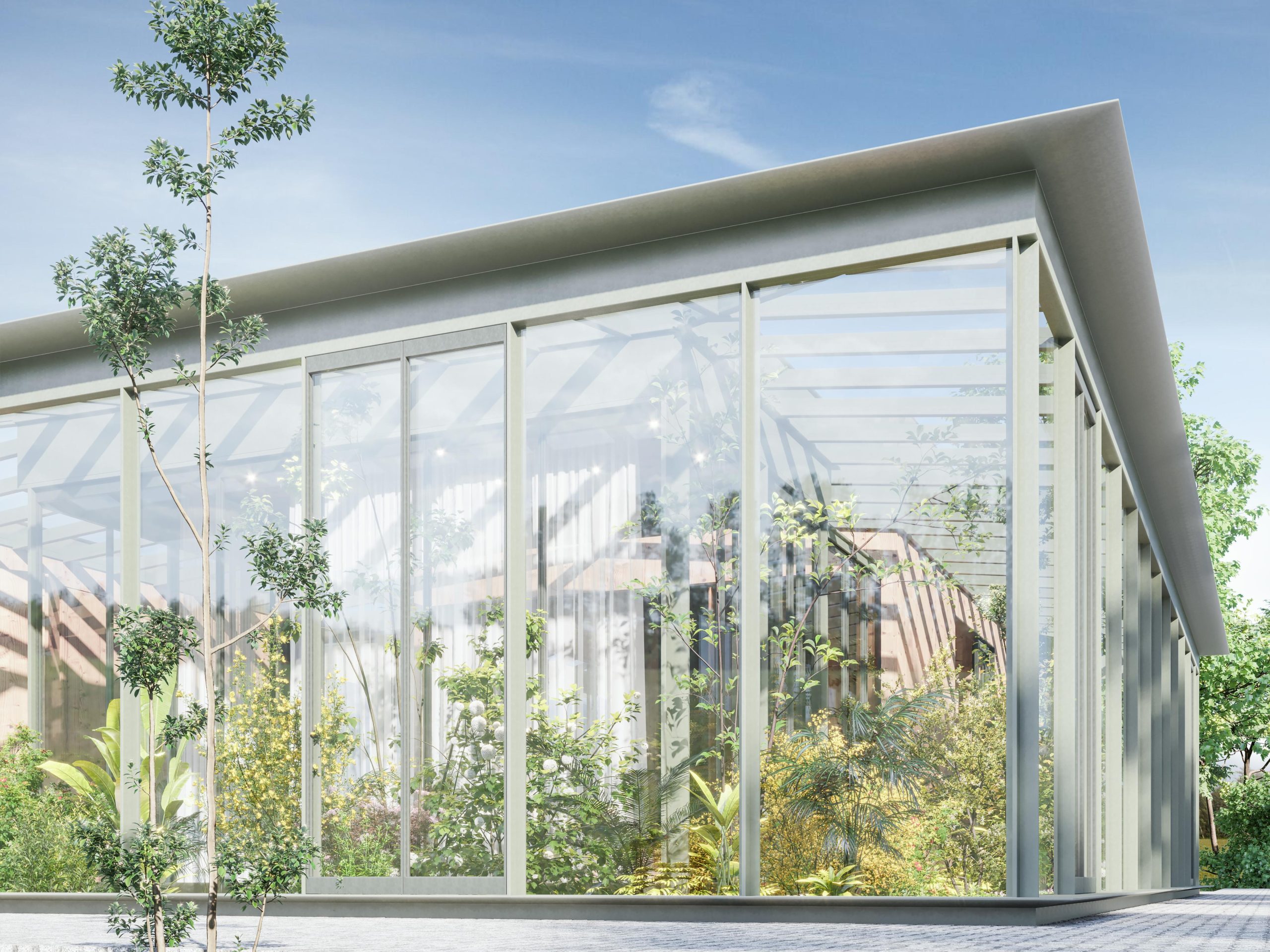
The exterior volume, through its simple appearance, with clear lines, does not reveal the interior organization of the space and its hybrid character. The modular metal structure of the greenhouse allows the repositioning but also the reconfiguration of the pavilion at another possible future location. The gesture resulted from the need to maintain a sensitivity of the settlement in the landscape, a permanent but unique dialogue with the light, movement, earth, people, specific to each context in which it will be integrated.
FUNCTIONALITY
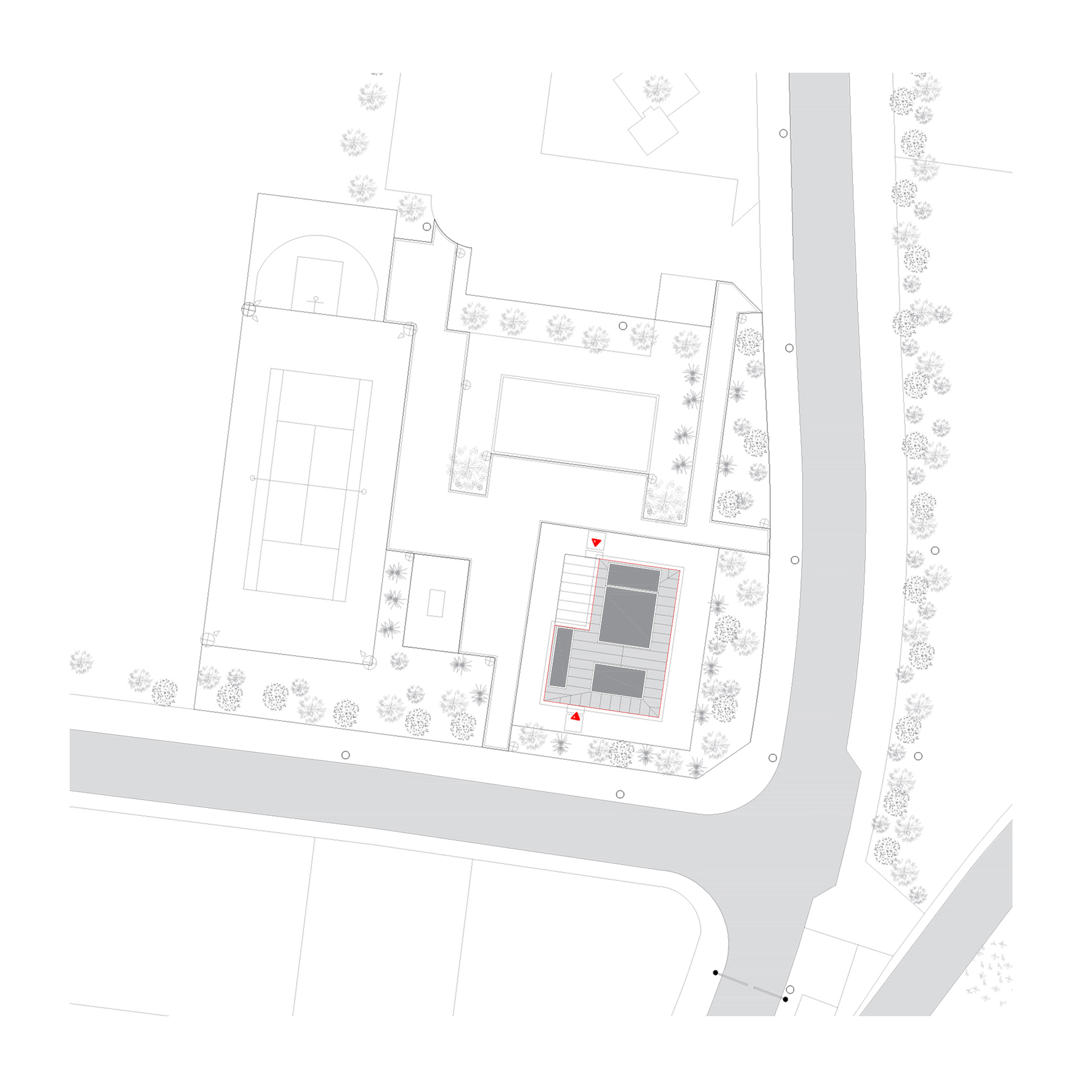
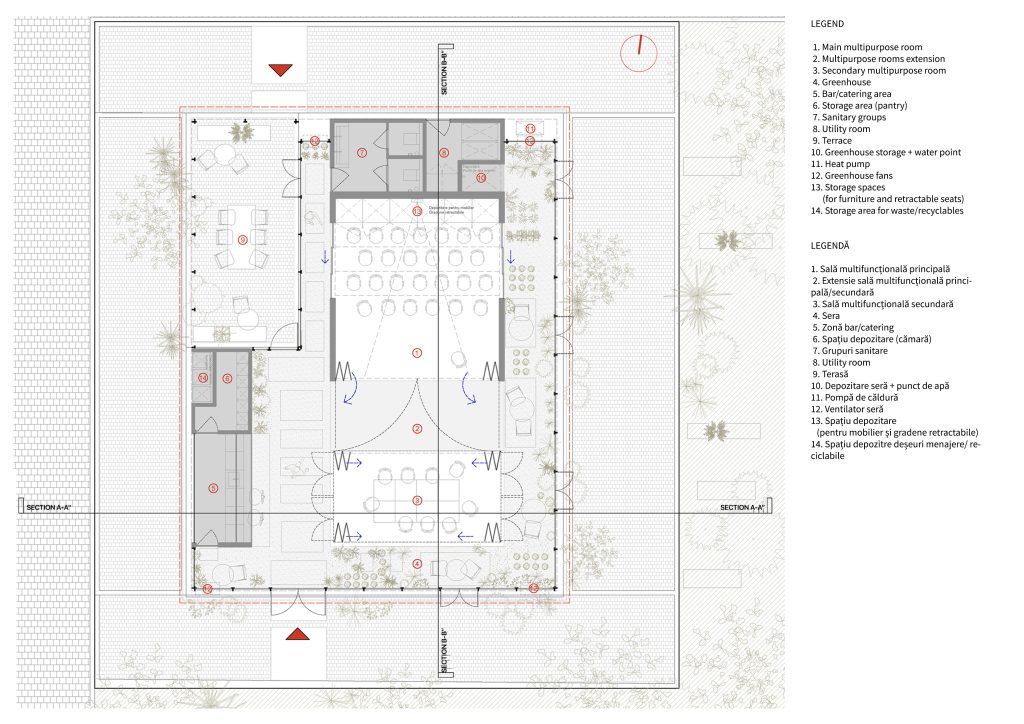
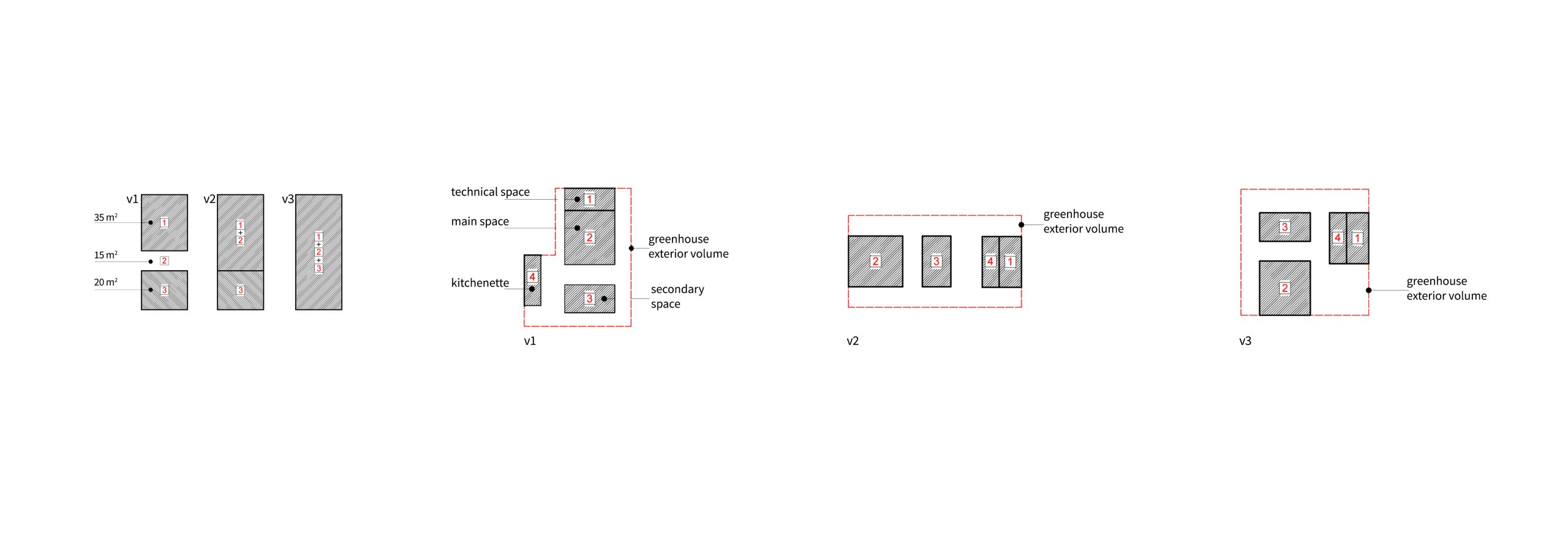
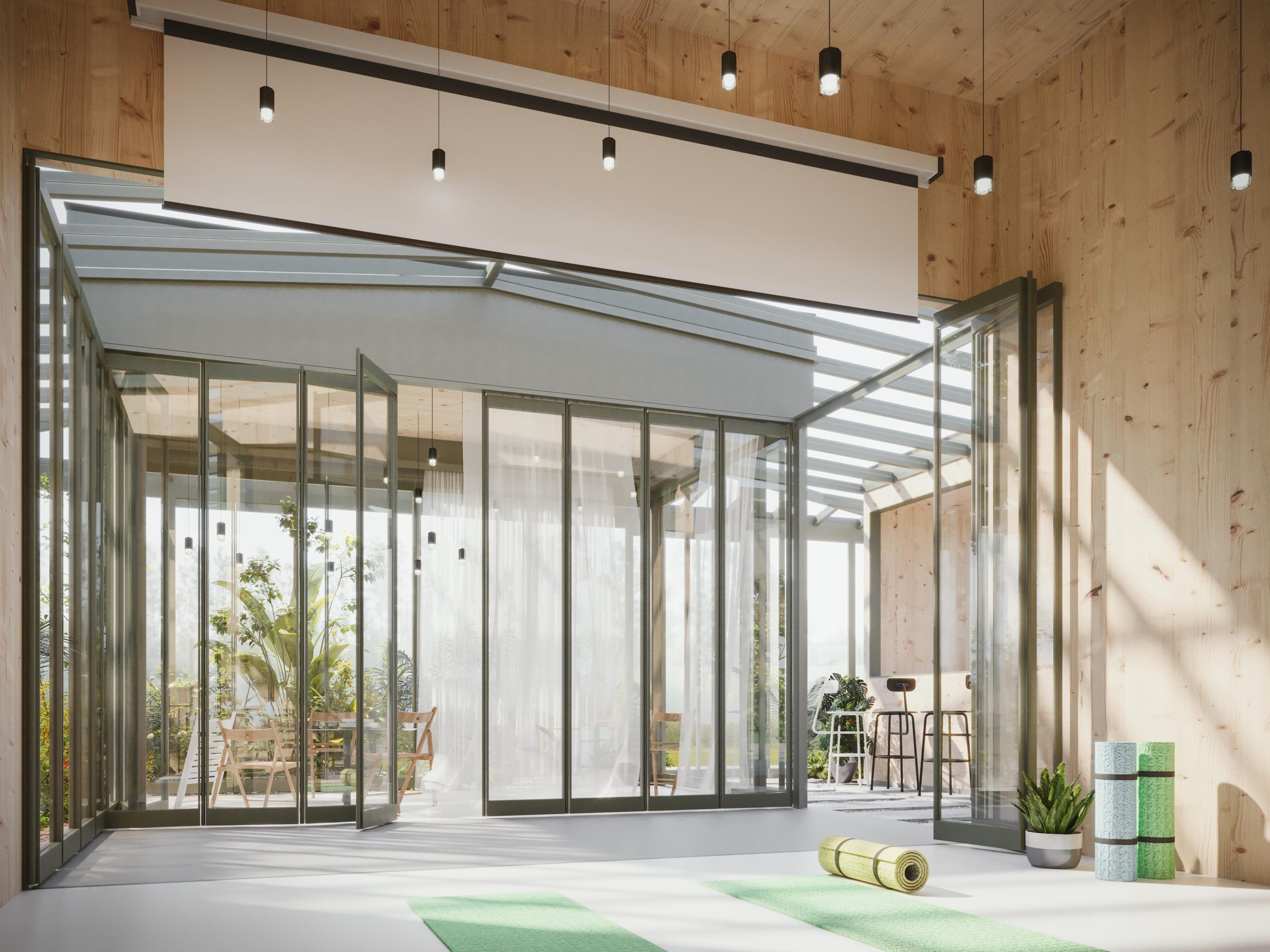
The spatial concept of the project is based on the development of four articulated interior greenhouse volumes and the possible routes offered by it. Two of the interior volumes can be connected, providing different usable areas for functions and, implicitly, various interaction scenarios. In connection with these, there are annexed spaces (warehouses, toilets, technical spaces) on the northwest side, and the bar, on the southwest side. Each space has a direct relationship with the greenhouse, but at the same time different.
Beyond the aesthetic, social and spatial arguments, the greenhouse contributes to generating heat during winter time, functioning as a thermal buffer, and during the summer, through ventilation and shading systems, it does not affect the interior comfort.
MATERIALS
From a construction point of view, we have chosen to use sustainable materials, which allow us to reassemble and relocate the pavilion, using glued wood panels (CLT) for the interior volumes and glass closure on the outside on a metal structure.
CONCLUSIONS
The pavilion proposes the intersection of human living space with that of plants, as a form of prototype necessary for the development of small groups of residents. A social greenhouse that relates and grows with a community in formation.